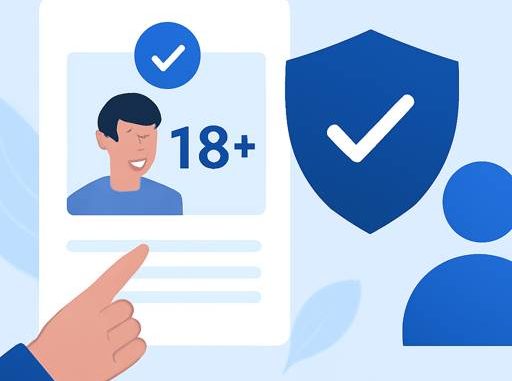
about : Stay compliant with the industry's leading SDK & API for age verification. Our plug-and-play system automatically verifies user age for visitors in regions with mandatory age checks — minimal friction, no complexity.
How a modern age verification system works and why it matters
An effective age verification system blends multiple verification techniques to quickly and accurately determine whether a user meets a minimum age requirement. At its core, the process begins with a lightweight client-side check that prompts the user for basic information, such as date of birth or an ID photo. That input is then validated against authoritative data sources through a secure, server-side SDK & API connection. Combining document scanning, optical character recognition (OCR), biometric liveness checks, and database lookups yields a layered approach that reduces false positives and prevents fraud attempts.
Modern solutions focus on reducing friction: a smooth flow completes verification within seconds rather than minutes. Adaptive logic tunes the verification path based on risk signals—low-risk users encounter simplified checks while higher-risk interactions trigger stronger validation. This tiered methodology empowers businesses to maintain conversion rates while meeting legal obligations. The system also responds to jurisdictional variation by applying region-specific rules and thresholds automatically, so compliance remains consistent across borders.
Security and privacy are central to trustworthy age verification. Data minimization, encryption in transit and at rest, and purpose-limited data retention help organizations comply with privacy laws, like GDPR and CCPA. Audit logs and tamper-evident records support transparency and regulator inquiries without exposing sensitive identifiers unnecessarily. For enterprises, integrating with a reputable provider through a flexible SDK & API means delegating complex verification logic to specialists who keep up with evolving identity fraud tactics and regulatory updates.
Balancing compliance, user experience, and operational efficiency
Meeting mandatory age-check rules across multiple markets can be operationally heavy if managed in-house. A plug-and-play verification solution simplifies this by offering prebuilt compliance workflows and regular updates for legislation changes. This reduces legal risk and frees product teams to focus on core features. Because the verification engine sits behind an SDK & API, businesses can orchestrate checks programmatically—triggering them at relevant user journeys, such as account creation, checkout, or content access points.

User experience (UX) is often the differentiator between a polished platform and one that sees high drop-off. Carefully designed verification screens with clear guidance, progressive disclosure, and accessible error handling help users complete checks without frustration. Strong usability reduces customer support burden and increases conversion. From a technical viewpoint, caching verified statuses for allowable durations and offering seamless re-verification options (for example, when a user relocates) cut down on repetitive friction while preserving compliance integrity.
Cost and time-to-market considerations also favor integrated solutions. Using an industry-standard SDK accelerates implementation compared to building a bespoke verification stack. Many providers supply detailed developer documentation, sandbox environments, and compliance certification materials that streamline onboarding with regulators or payment partners. Operationally, centralizing verification reduces overhead, simplifies reporting, and delivers scalable throughput, making it feasible to support sudden traffic spikes without compromising verification quality.
Integration, use cases, and real-world examples that demonstrate impact
Practical deployments of age verification span e-commerce for age-restricted products, online gambling, adult content platforms, streaming services with rated content, and in-person venue check-ins. For example, a beverage retailer implemented an SDK to verify age at checkout, integrating an ID-scan option that reduced chargebacks and fines by preventing underage purchases. A streaming platform applied adaptive checks that only required photo ID for accounts flagged by behavioral signals, preserving conversion for the majority while satisfying regulations in stricter territories.
Another real-world case involved a vape retailer that leveraged geographic rules within the API to apply different minimums and verification depth across states and countries. The automated regional logic eliminated manual policy mapping and prevented accidental noncompliance. Similarly, a gaming operator combined device fingerprinting and document validation to reduce fraudulent account creation and ensure that bonus offers were not abused by underage users. These implementations illustrate how layered verification reduces risk without sacrificing conversion.
From a technical perspective, best practices include deploying the SDK in unobtrusive UI components, performing risk-based checks, and aligning retention policies with legal requirements. Monitoring and analytics are essential: tracking verification pass rates, drop-off points, and fraud signals enables continuous tuning. Finally, selecting a provider with transparent privacy practices and robust support ensures that the system remains reliable as laws and threats evolve. For many organizations, integrating a proven age verification system becomes a strategic move that protects revenue, reputation, and users while keeping operational complexity low.

A Dublin cybersecurity lecturer relocated to Vancouver Island, Torin blends myth-shaded storytelling with zero-trust architecture guides. He camps in a converted school bus, bakes Guinness-chocolate bread, and swears the right folk ballad can debug any program.
